How AI Is Transforming Small Businesses in 2026
Introduction: Why AI Is No Longer Optional for Small Businesses
Artificial Intelligence (AI) is no longer a futuristic concept reserved for multinational corporations. In 2026, AI has become a practical and increasingly essential tool for individuals and companies like small and medium-sized enterprises (SMEs) across the United States, United Kingdom, Europe, Canada, the Gulf region, and Asia.
According to insights published by McKinsey & Company and PwC, AI adoption among smaller businesses has accelerated dramatically over the past three years, driven by affordable cloud-based tools and automation platforms.
For small businesses, AI is no longer about innovation prestige, it is about competitiveness, efficiency, and survival.
The Global State of AI Adoption Among SMEs in 2026
AI Adoption in the USA and Canada
North America remains one of the fastest-growing AI markets for SMEs. Businesses are increasingly using AI for marketing automation, accounting, customer service chatbots, and predictive analytics.
Small e-commerce brands, consulting firms, and digital agencies are leading adoption because of lower implementation barriers.
AI Growth in the UK and Europe
In the UK and EU, regulatory frameworks and digital transformation initiatives have encouraged SMEs to explore AI-driven efficiency models. Reports from the OECD highlight that European small businesses are prioritising AI for operational optimisation rather than workforce replacement.
Rapid Expansion in the Gulf Region
Countries like the UAE and Saudi Arabia are investing heavily in AI infrastructure. Multiple studies, like Sharp EU study, show European SMEs increasingly use AI for practical business operations, though many still struggle with digital foundations.
AI Acceleration in Asia and China
China’s strong AI ecosystem and digital commerce environment have influenced SMEs to adopt AI-powered tools at scale, especially in supply chain management and customer engagement.
7 Key Ways AI Is Transforming Small Businesses
1. Automating Repetitive Administrative Tasks
AI tools now handle scheduling, invoicing, email filtering, and document processing. This reduces administrative burden and allows business owners to focus on strategic growth.
2. AI-Powered Customer Service
Chatbots and AI-driven customer support systems provide 24/7 assistance, improving response times while reducing staffing costs.
Small businesses can now offer enterprise-level service experiences at a fraction of the cost.
3. Smarter Marketing and Personalisation
AI analyses customer behaviour, purchase history, and engagement data to create personalised marketing campaigns. This increases conversion rates and improves return on advertising spend.
4. Data-Driven Decision Making
Instead of relying on intuition, SMEs are using AI-powered dashboards to analyse sales trends, forecast demand, and identify growth opportunities.
5. AI in Accounting and Financial Forecasting
AI-powered accounting tools automate expense tracking, detect anomalies, and generate predictive financial reports, reducing errors and improving financial clarity.
6. Supply Chain and Inventory Optimisation
AI systems predict demand fluctuations and optimise inventory levels, minimising waste and stock shortages.
7. Cybersecurity and Fraud Detection
Small businesses are increasingly vulnerable to cyber threats. AI-based security tools detect unusual behaviour patterns and prevent fraud before significant damage occurs.
Real-World Examples of Small Businesses Using AI
Retail Example
AI marketing and analytics help small businesses personalise customer interactions and improve ROI. (G5tech)
Service Business Example
SMEs in Canada report using AI for administrative automation, marketing, and customer service, with many small business owners saying AI tools reduce workload and improve operational efficiency. (OECD,2025)
E-Commerce Example
An SME in the UAE used AI analytics to optimise digital ad campaigns, cutting customer acquisition costs significantly.
Professional Services Example
A 2024 survey by the U.S. Chamber of Commerce reported that 98% of small businesses in the U.S., including service firms like accounting agencies, are now using AI-enabled solutions to improve efficiency and operational outcomes (AP, 2024)
Benefits of AI for Small Businesses
Cost Reduction
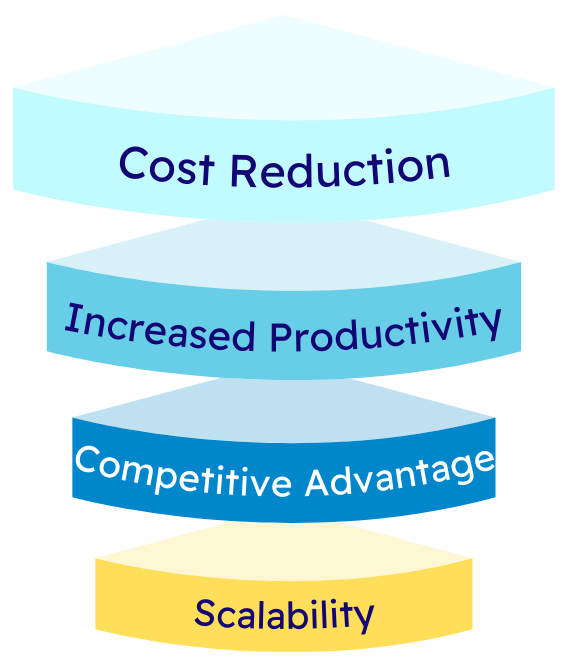
Automation lowers operational expenses by reducing manual tasks.
Increased Productivity
Employees can focus on higher-value strategic work instead of repetitive activities.
Competitive Advantage
AI enables SMEs to compete with larger enterprises on efficiency and customer experience.
Scalability
AI systems grow with the business, allowing expansion without proportional increases in overhead costs.
Challenges and Risks of AI Adoption
While AI offers significant benefits, small businesses must consider:
- Data privacy and compliance regulations
- Employee skill gaps
- Over-reliance on automation
- Initial implementation learning curve
- Responsible adoption is critical for sustainable growth.
How Small Businesses Can Start Using AI in 2026 (Step-by-Step Guide)
Step 1: Identify Operational Bottlenecks
Determine where time and money are being lost.
Step 2: Start Small
Begin with affordable AI tools for marketing, accounting, or customer service.
Step 3: Train Your Team
Provide basic digital training to ensure smooth integration.
Step 4: Measure ROI
Track productivity improvements and cost savings.
Step 5: Scale Strategically
Expand AI use only after measurable success.
The Future of AI for SMEs Beyond 2026
AI adoption among small businesses is expected to deepen rather than slow. The World Economic Forum has repeatedly highlighted that AI will reshape business models globally, particularly for SMEs embracing digital transformation early.
The key differentiator will not be whether a small business uses AI, but how effectively it integrates it into strategy.
Frequently Asked Questions
Is AI expensive for small businesses?
Not necessarily. Many AI tools operate on affordable subscription models, making them accessible even to micro-businesses.
Can AI replace employees in small businesses?
AI primarily enhances productivity rather than replacing staff entirely. Human oversight remains essential.
What is the biggest benefit of AI for SMEs?
Operational efficiency combined with data-driven decision-making.
Is AI safe for business data?
AI can improve security, but businesses must choose compliant providers and implement strong data governance practices.
You can read this article if you are interested in freelancing
How to Make Money from Home: The Best Ways in 2026